About Tribes
Omo Valley Tribes
The Omo Valley in southern Ethiopia is one of the most culturally diverse regions in Africa, The name Omo Valley is derived from the Omo River, one of Ethiopia’s longest rivers, which flows through the heart of the region and sustains many of the tribes’ villages along its course. Omo valley is a home to more than 16 unique tribes who have preserved their ancient traditions for centuries. the Omo Valley offers travelers the rare chance to witness authentic cultures, colorful ceremonies, and ways of life that remain largely untouched by the modern world.
Exploring the Omo Valley tribes is one of the highlights of any Ethiopia tour. Each tribe has its own language, customs, dress, and rituals, making an Omo Valley cultural tours an unforgettable journey into Ethiopia’s human heritage.
Those 16 Omo valley tribes have 3 major Language families the Cushitic branch, Nilotic branch and Omotic branch, below are the 16 tribes name of the omo valley
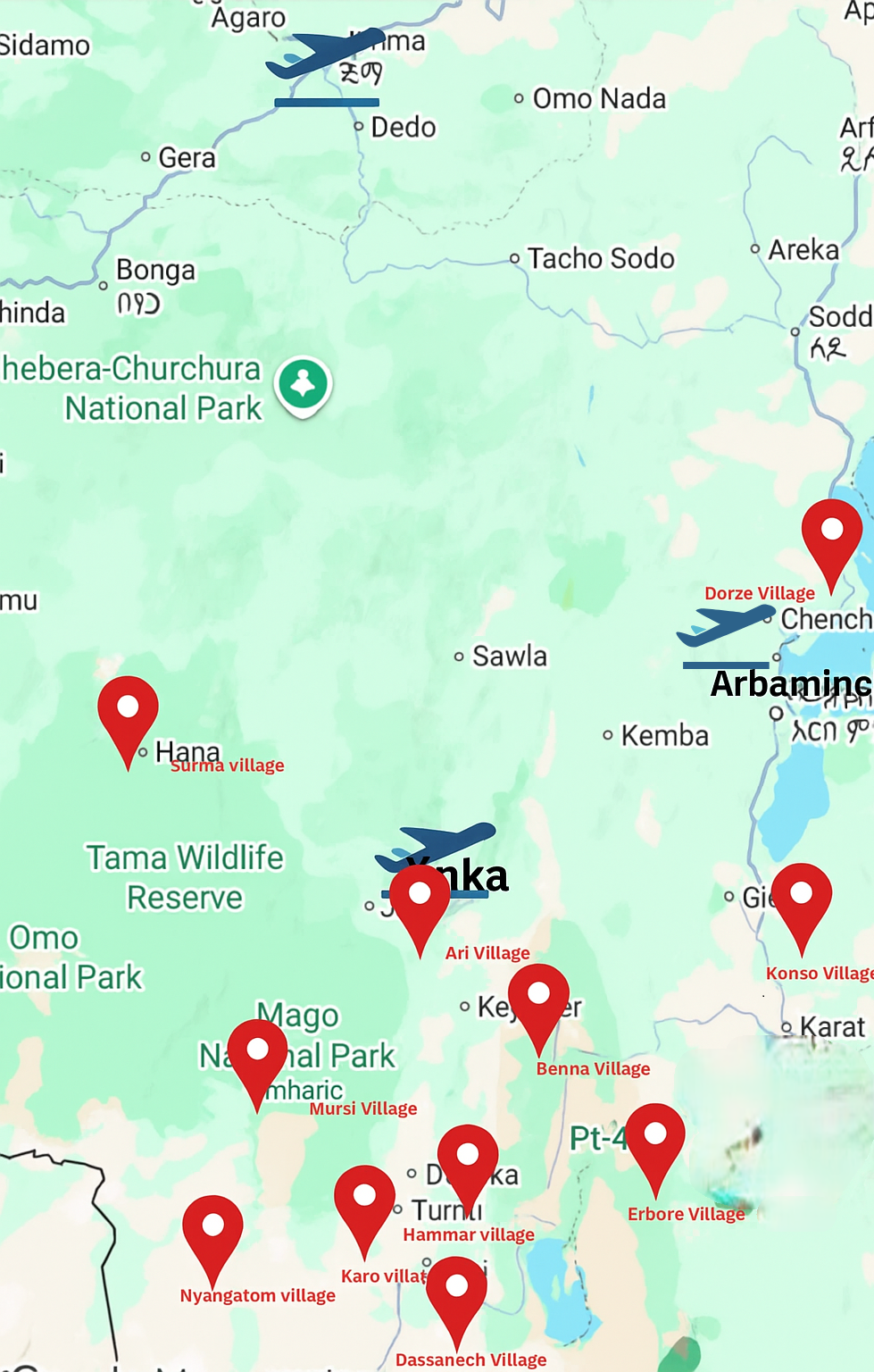
- Hamar Tribe, are Agro-Pastoralists Community, Known for the spectacular bull-jumping ceremony and their striking hairstyles decorated with ochre and butter, they use Turmi town as a hub, who number about 70,000 people.
- Mursi Tribe, Famous for women wearing lip plates, one of the most iconic images of Omo Valley tours, who number about only 15,000 people, they are Pastoralists, rely on cattle.
- Karo Tribe, well known by body painting, living along the Omo River with breathtaking village views. who number about only 2000 people, they are Agro-Pastoralists Community.
- Dassanech Tribe, Pastoral and riverine people living near Lake Turkana, known for their resilience and traditions, who number about 50,000 people in Ethiopia with out Kenya.
- Banna Tribe, Similar to the Hamar, they share similar ceremonies and colorful clothing, who number about 47,000 people, they are Agro-Pastoralists community just like Hamar Tribe.
- Ari People, Farmers and artisans, producing much of the Omo Valley’s pottery and traditional crafts, they are located near Jinka town, who number about 320,000 people.
- Tsemay, Semi-nomadic people living near the Weyto River, who number about 15,000 people.
- Konso People, recognized by UNESCO for their unique terraced landscapes and wooden grave markers, who number about only 250,000 people, Known for their terraced agriculture, growing sorghum, maize, and cotton
- Bodi (Me’en) Tribe, This Pastoralists Tribe Known for the Ka’el Festival, where men drink milk and blood to compete in a fattening ceremony, who number about only 10,000 people.
- Surma (Suri) Tribe, Similar to the Mursi, they practice scarification and lip plates, often found in the western Omo region of the valley, who number about 55,000 people, they are strongly pastoralist tribes.
- Nyangatom Tribe, Semi-nomadic people who herd cattle and live along the Omo River, who number about 50,000 people, in Ethiopia with out South Sudan.
- Erbore Tribe, A small group with distinct jewelry and hairstyles. who number about only 7,000 people, they are Agro-Pastoralists community.
- Dorze People, Famous for their weaving traditions, beehive-shaped bamboo houses, enset (false banana) farming, who number about 50,000 people.
- Burji Tribe, Agro-pastoralists known for farming and cultural music, who number about 81,000 people.
- Gamo People, Highland farmers with unique festivals and cultural identity, who number about 1,000,000 people.
- Kwego (Muguji) Tribe, A small fishing community